


Pipe Saddle Selection for Reliable Pipework

A pipe saddle often looks like a minor fitting until a branch connection has to be added cleanly, quickly and without compromising the line. On site, that usually means balancing pressure performance, material compatibility, installation access and long-term reliability rather than simply choosing a part that fits the outside diameter.
For trade and industrial buyers, the detail matters. A poorly specified saddle can introduce leakage risk, local stress, installation delays or avoidable maintenance. A correctly selected saddle does the opposite - it provides a secure outlet or support point, suits the parent pipe material, and keeps the system aligned with the duty it was designed for.
What a pipe saddle does
In most practical applications, a pipe saddle is used either to create a branch connection on an existing pipeline or to provide a shaped clamping interface around the outside of the pipe. In pressure systems, the term commonly refers to a saddle fitting that wraps around the pipe barrel and allows a take-off point for another line, instrument connection or auxiliary service.
That sounds straightforward, but saddles are not universal components. The pipe material, wall thickness, operating pressure, temperature range and conveyed media all affect suitability. A saddle intended for a polyethylene line is not automatically suitable for PVC-U, ABS or metal pipework, and even within the same material family there may be restrictions around pressure class or jointing method.
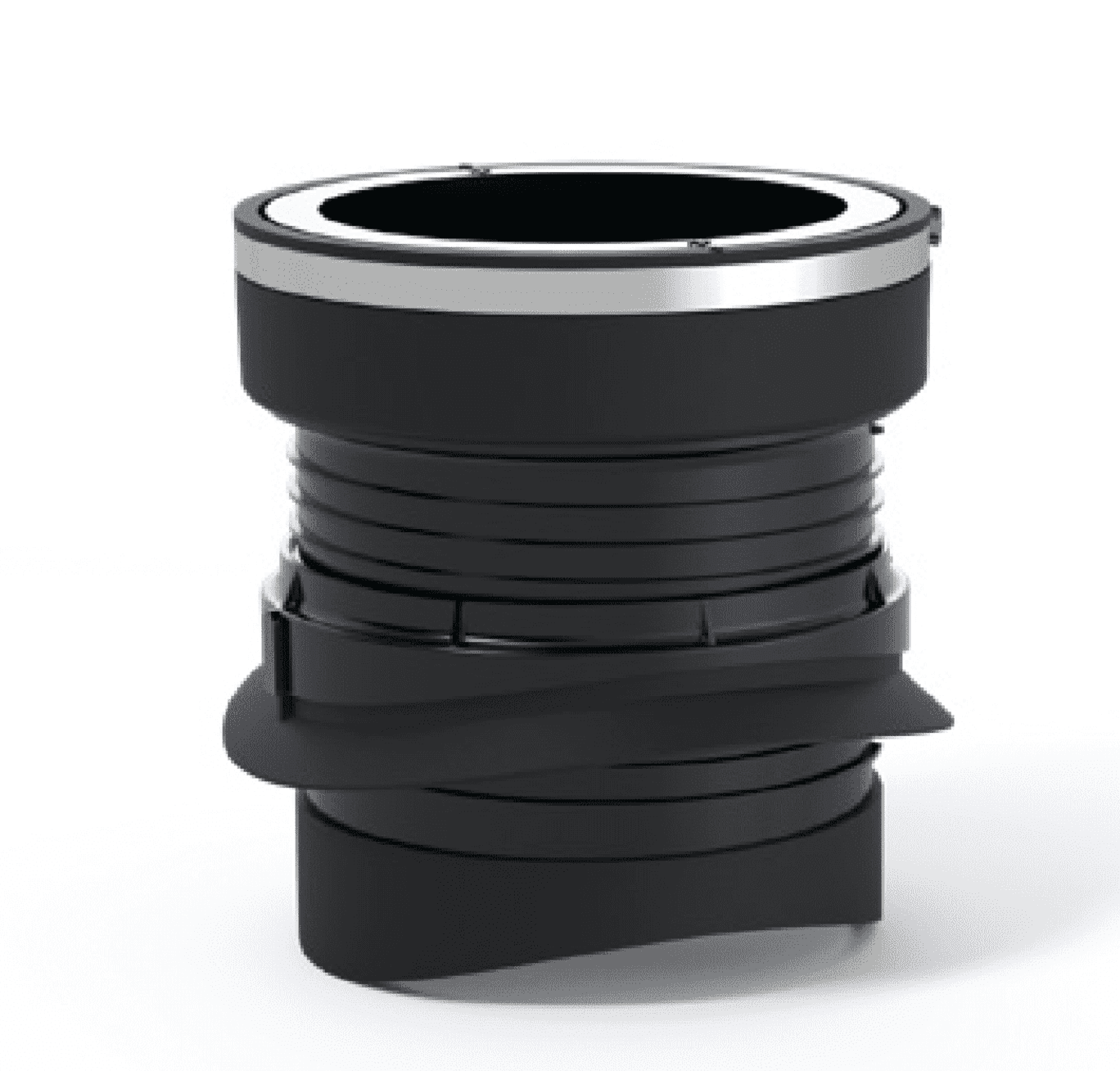
Pipe saddle types and where each fits
The most common distinction is between saddles used for branching and saddles used for support or restraint. Branch saddles are typically specified where a new outlet is required from an existing main. They may be mechanical clamp-on designs, electrofusion saddles for PE systems, or specialist repair and tapping saddles intended for live or planned interventions.
Support saddles are different. These are generally used to cradle the pipe and spread load where the line passes over brackets, clips or structural supports. Their role is less about making a connection and more about avoiding point loading, distortion or wear, especially on thermoplastic systems where unsupported stress can become a long-term issue.
For most industrial and commercial pipework buyers, the real decision is not the name of the fitting but the duty it must perform. If the objective is a pressure-rated branch on a PE water line, the answer will differ from a low-pressure drain or a support arrangement on a chemical dosing installation.
Material compatibility matters more than appearance
A saddle may appear mechanically simple, but compatibility with the carrier pipe is the first technical check. Plastic systems are especially sensitive because materials expand at different rates, respond differently to clamp load, and have distinct jointing requirements.
On polyethylene systems, electrofusion saddles are widely used because they create an integrated joint when installed correctly on compatible PE pipe. They are commonly specified for water, utility and process applications where a dependable fused outlet is preferred over a purely mechanical connection. Surface preparation, scrape depth and fusion procedure are critical. If those are not controlled, the fitting may look installed while the joint quality remains poor.
On PVC-U and ABS systems, mechanical saddles are more typical where branch additions are needed. Here, gasket material, clamp geometry and drilling method all matter. Too much local compression can damage the pipe wall. Too little, and the seal may not hold under pressure or thermal cycling. Chemical compatibility should also be checked, particularly in process lines carrying aggressive fluids or cleaning chemicals.
Metal pipe saddles and mixed-material assemblies introduce another consideration - corrosion. If dissimilar metals are present in damp or exposed conditions, galvanic effects can shorten service life. For outdoor or washdown environments, corrosion resistance is not a nice-to-have; it is part of the specification.
Pressure rating and operating conditions
One of the more common buying errors is assuming that because the pipeline has a known pressure class, every accessory around it is automatically suitable. A pipe saddle must be assessed against the actual operating envelope, including surge, temperature and installation condition.
A branch connection on a pumped line may experience transient loads that are well above steady-state pressure. If the saddle is only marginally rated, those spikes can become the weak point. Temperature also changes the equation. Thermoplastics generally lose pressure capability as temperature rises, so a fitting that is suitable at ambient conditions may require derating in warmer service.
There is also a difference between nominal pressure rating and real application suitability. Clean cold water, slurry, compressed air, mild chemicals and abrasive effluent do not place the same demands on a branch fitting. Buyers dealing with industrial process systems should check not only PN rating but the manufacturerâs application data, media compatibility and installation limitations.
Installation constraints on site
A good specification on paper can still fail in practice if it ignores access and installation method. Saddles are often selected for retrofit work, maintenance upgrades or extensions to existing systems, which means the line may be in a plant room, trench, riser or congested service zone.
That affects product choice. A large clamp saddle may need more clearance around the pipe than is available. An electrofusion saddle requires controlled preparation, fusion equipment and trained installation. A tapping saddle may reduce shutdown time, but only if the surrounding pipe condition is suitable and the installation team can work safely within the required parameters.
Pipe ovality is another site issue that gets overlooked. Older plastic lines or poorly supported sections may not be perfectly round. That can make sealing more difficult, particularly with mechanical saddles designed around nominal dimensions. In those cases, checking actual external diameter and condition on site is better than ordering purely from line schedule.
Choosing the right pipe saddle for the system
The most efficient way to specify a saddle is to start with the parent pipe and work outward. Identify the pipe material, outside diameter, wall specification, operating pressure and fluid. Then define the branch size, jointing preference and whether the work is on a new installation or an existing live system.
After that, review the environment. Indoor dry plant, buried service, exposed external pipework, UV exposure, agricultural washdown areas and chemical process zones all change the suitability of materials and sealing elements. A fitting that performs well in a clean internal mechanical room may not be the best choice for outdoor utility service.
Standards and approvals should also sit within the decision process. For potable water, utility or regulated installations, recognised approvals may be mandatory rather than optional. For industrial service, consistency with the rest of the pipeline specification is often just as important. Mixing a high-grade pipe system with a poorly matched branch fitting is false economy.
Common specification mistakes
The first mistake is treating saddles as generic. Outside diameter alone is not a full specification. Material, SDR or wall thickness, branch form and pressure rating all need to align.
The second is overlooking the condition of the existing pipe. Saddles rely on contact, sealing and load distribution around the pipe barrel. If the parent pipe is scored, weathered, out of round or chemically degraded, the fitting may not achieve the intended performance.
The third is underestimating installation quality. Even a correctly chosen saddle can fail if bolt torque is uneven, fusion preparation is poor, the drilled outlet is misaligned or the branchwork imposes stress on the outlet. A saddle should not be used to compensate for bad support design elsewhere in the system.
Procurement considerations for trade buyers
For contractors and buyers working to programme, availability matters almost as much as specification. Delays often happen not because a saddle is hard to source in principle, but because the exact combination of size, material and pressure class was not confirmed early enough.
That is why catalogue clarity has value. Buyers typically need to filter quickly by pipe material, connection size, pressure capability and application. If those details are clear from the outset, it becomes much easier to align procurement with installation sequencing and avoid part substitutions that create risk later.
For larger projects or repeat maintenance schedules, consistency is worth protecting. Standardising on approved saddle types across a site or framework contract reduces uncertainty for installers and stores teams alike. It also simplifies spares holding and helps maintain a more controlled pipework specification across multiple work orders.
Plastic Pipe and Fittings Distribution serves this kind of requirement well because technical buyers rarely need just one component. They need the saddle, the branch fittings, valves, adaptors and compatible pipework to arrive on time and match the system duty.
When a different fitting is the better answer
A saddle is not always the right solution. If the pipeline is being fabricated new, a purpose-made tee may provide a cleaner and more predictable branch arrangement. If the line is heavily corroded or damaged, a repair section may be safer than clamping onto compromised pipe. If the branch will see high mechanical load, additional support or an alternative connection method may be required.
That is the practical point. The best choice is not the most convenient fitting in isolation, but the one that suits the whole system - material, pressure, environment, installation method and service life. A pipe saddle earns its place when it solves the connection properly and keeps the pipework dependable long after the job has been signed off.

